| Septimius Severus, Lucius |
 


  |
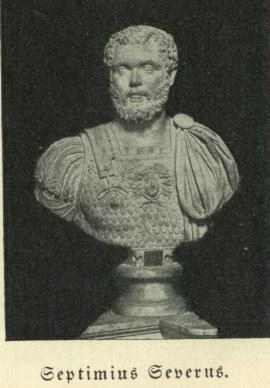 Septimius
Severus, Lucius (146-211
n. Chr.), römischer Kaiser (193-211). Er wurde am 11. April 146 in Leptis
Magna (nahe des heutigen Homs in Libyen) geboren. Nach juristischen Studien
in Rom übte Severus verschiedene militärische und politische Ämter aus.
172 war er Quaestor militaris (siehe Quästor) in der Provinz Baetica in
Spanien und 190 Statthalter von Oberpannonien. Nach der Ermordung des
römischen Kaisers Lucius Aelius Commodus 192 wurde der römische Konsul
Publius Helvius Pertinax Kaiser. Schon nach einem Jahr Amtszeit wurde
aber auch er ermordet; Severus wurde in Carnutum zum Kaiser ausgerufen.
In Rom war inzwischen Didius Severus Julianus von den Prätorianern zum
Kaiser ausgerufen und, als sich Severus mit seinen Truppen Rom näherte,
ermordet worden. Severus verfolgte Pertinax' Mörder, löste die Prätorianergarde
auf und organisierte sie von Grund auf neu. 194 besiegte er den römischen
Statthalter in Syrien, Gaius Pescennius Niger, der im Osten zum Kaiser
ausgerufen worden war. In Gallien kämpfte er gegen seinen Rivalen, den
römischen Feldherrn Decimus Clodius Albinus, den er zunächst durch den
Cäsarentitel beruhigt, nach seinem Sieg über Pescennius aber zum Staatsfeind
erklärt hatte. Severus besiegte Clodius 197 und im folgenden Jahr die
Parther in Mesopotamien. 208 begab er sich nach Britannien, um dort einen
Aufstand niederzuschlagen. Im Norden der Insel bereitete er einen Feldzug
gegen die Kaledonier vor und ließ den Hadrianswall an der nördlichen Grenze
des römischen Britannien wiederherstellen. Er starb während des Feldzuges
am 4. Februar 211 in York. Sein Sohn Caracalla, bereits seit 197 als Augustus
Mitregent, wurde sein Nachfolger. Severus' Regierungszeit gilt als Epoche
rechtlicher und militärischer Reformen. Ehemalige Offiziere konnten Ämter
in der Zivilverwaltung übernehmen, den Soldaten waren einige Zugeständnisse
gemacht worden; Severus ordnete die zentrale Finanzverwaltung neu und
führte die Trennung von Privatvermögen des Kaisers und Staatsvermögen
ein; er beschränkte die Macht des Senats und nivellierte die Unterschiede
zwischen dem Kernland Italien und den Provinzen.
Septimius
Severus, Lucius (146-211
n. Chr.), römischer Kaiser (193-211). Er wurde am 11. April 146 in Leptis
Magna (nahe des heutigen Homs in Libyen) geboren. Nach juristischen Studien
in Rom übte Severus verschiedene militärische und politische Ämter aus.
172 war er Quaestor militaris (siehe Quästor) in der Provinz Baetica in
Spanien und 190 Statthalter von Oberpannonien. Nach der Ermordung des
römischen Kaisers Lucius Aelius Commodus 192 wurde der römische Konsul
Publius Helvius Pertinax Kaiser. Schon nach einem Jahr Amtszeit wurde
aber auch er ermordet; Severus wurde in Carnutum zum Kaiser ausgerufen.
In Rom war inzwischen Didius Severus Julianus von den Prätorianern zum
Kaiser ausgerufen und, als sich Severus mit seinen Truppen Rom näherte,
ermordet worden. Severus verfolgte Pertinax' Mörder, löste die Prätorianergarde
auf und organisierte sie von Grund auf neu. 194 besiegte er den römischen
Statthalter in Syrien, Gaius Pescennius Niger, der im Osten zum Kaiser
ausgerufen worden war. In Gallien kämpfte er gegen seinen Rivalen, den
römischen Feldherrn Decimus Clodius Albinus, den er zunächst durch den
Cäsarentitel beruhigt, nach seinem Sieg über Pescennius aber zum Staatsfeind
erklärt hatte. Severus besiegte Clodius 197 und im folgenden Jahr die
Parther in Mesopotamien. 208 begab er sich nach Britannien, um dort einen
Aufstand niederzuschlagen. Im Norden der Insel bereitete er einen Feldzug
gegen die Kaledonier vor und ließ den Hadrianswall an der nördlichen Grenze
des römischen Britannien wiederherstellen. Er starb während des Feldzuges
am 4. Februar 211 in York. Sein Sohn Caracalla, bereits seit 197 als Augustus
Mitregent, wurde sein Nachfolger. Severus' Regierungszeit gilt als Epoche
rechtlicher und militärischer Reformen. Ehemalige Offiziere konnten Ämter
in der Zivilverwaltung übernehmen, den Soldaten waren einige Zugeständnisse
gemacht worden; Severus ordnete die zentrale Finanzverwaltung neu und
führte die Trennung von Privatvermögen des Kaisers und Staatsvermögen
ein; er beschränkte die Macht des Senats und nivellierte die Unterschiede
zwischen dem Kernland Italien und den Provinzen.
Severus, Lucius Septimius (146-211), Roman emperor (193-211), who accentuated the military and despotic character of the imperial office. He was born April 11, 146, in Leptis Magna (near the modern city of Homs, Libya). After receiving a law education in Rome, Severus held a number of military and political titles. He became quaestor militaris in the province of Baetica in Spain in 172 and by 190 he was governor of Pannonia, a Roman province in central Europe. When the Roman emperor Lucius Aelius Commodus was murdered in 192, the Roman consul Publius Helvius Pertinax became emperor. He, in turn, was slain a year later, and Severus, determined to avenge his death, returned to Rome with his army. Severus became emperor after the murder of Didius Severus Julianus, who had succeeded Pertinax by purchasing the throne from the Praetorian Guard. Severus punished the murderers of Pertinax and disbanded the praetorian troops, reorganizing the guard on entirely new principles. In 194, he defeated the Roman governor of Syria, Gaius Pescennius Niger, a rival for the throne, and captured the ancient city of Byzantium. He fought in Gaul with the Roman general Decimus Clodius Albinus, who had been proclaimed emperor by his legions after the death of Pertinax and who was conquered by Severus in 197. After his brilliant success against the Parthians of Persia who had invaded Mesopotamia in Asia, Severus sailed to Britain to quell a revolt there in 208. He travelled with his army to the north of the island, where he led an expedition against the Caledonians and re-established Hadrian's Wall as the northern boundary of Roman Britain. He died at York on February 4, 211, and was succeeded by his son, Caracalla. Severus's reign marks a period of both juridical and military reform. He allowed ex-officers to hold civil service jobs, improved the soldiers' conditions, created a new imperial treasury, and reduced the power of the Senate and the Italian aristocracy.
Severo, Lucio Settimio (Leptis Magna, nell'attuale Libia 146 - Eburacum, oggi York 211 d.C.), imperatore romano (193-211 d.C.). Di origine africana, rivestì cariche militari e civili, tra cui quella di governatore della Pannonia a partire dal 191. Dopo l'assassinio dell'imperatore Publio Elvio Pertinace (193), Settimio Severo venne acclamato imperatore dalle sue legioni. Entrato a Roma con l'esercito, assunse ufficialmente la carica dopo aver eliminato i rivali, tra cui Didio Giuliano, eletto dalla guardia pretoriana. Settimio Severo punì gli assassini di Pertinace, quindi sciolse e riorganizzò la guardia pretoriana. Nel 194 sconfisse il governatore romano di Siria, Caio Pescennio Nigro, suo rivale, e si impossessò della città di Bisanzio. Combatté in Gallia contro il generale Decimo Clodio Albino, anch'egli proclamato imperatore dalle sue legioni alla morte di Pertinace, e lo sconfisse nel 197. Dopo un brillante successo contro i parti in Persia (198), che avevano invaso la Mesopotamia, si recò in Britannia per soffocare una rivolta (208): si spinse nel nord dell'isola per combattere i caledoni, ristabilendo il Vallo d'Adriano come confine settentrionale della Britannia romana. Gli succedette il figlio, Caracalla. Il regno di Settimio Severo fu contrassegnato da una serie di riforme giuridiche e militari. L'imperatore permise agli ex ufficiali di rivestire cariche civili, migliorò le condizioni dei soldati, incrementò le entrate imperiali e ridusse il potere del senato e dell'aristocrazia. Furono realizzate anche numerose opere edilizie a Roma (Arco di Settimio Severo) e nelle province (Arco di Leptis Magna).
| Quelle: Microsoft Encarta |
 |